Fit, qualification and readiness
What the fit percentage shows, why it does not mean you qualify, and how to read both with the recommendation and readiness.
Hankevo shows several assessments for a tender or a grant. They answer different questions, and one does not replace another. The most common mistake is to read a high fit as permission to take part.
Five different questions
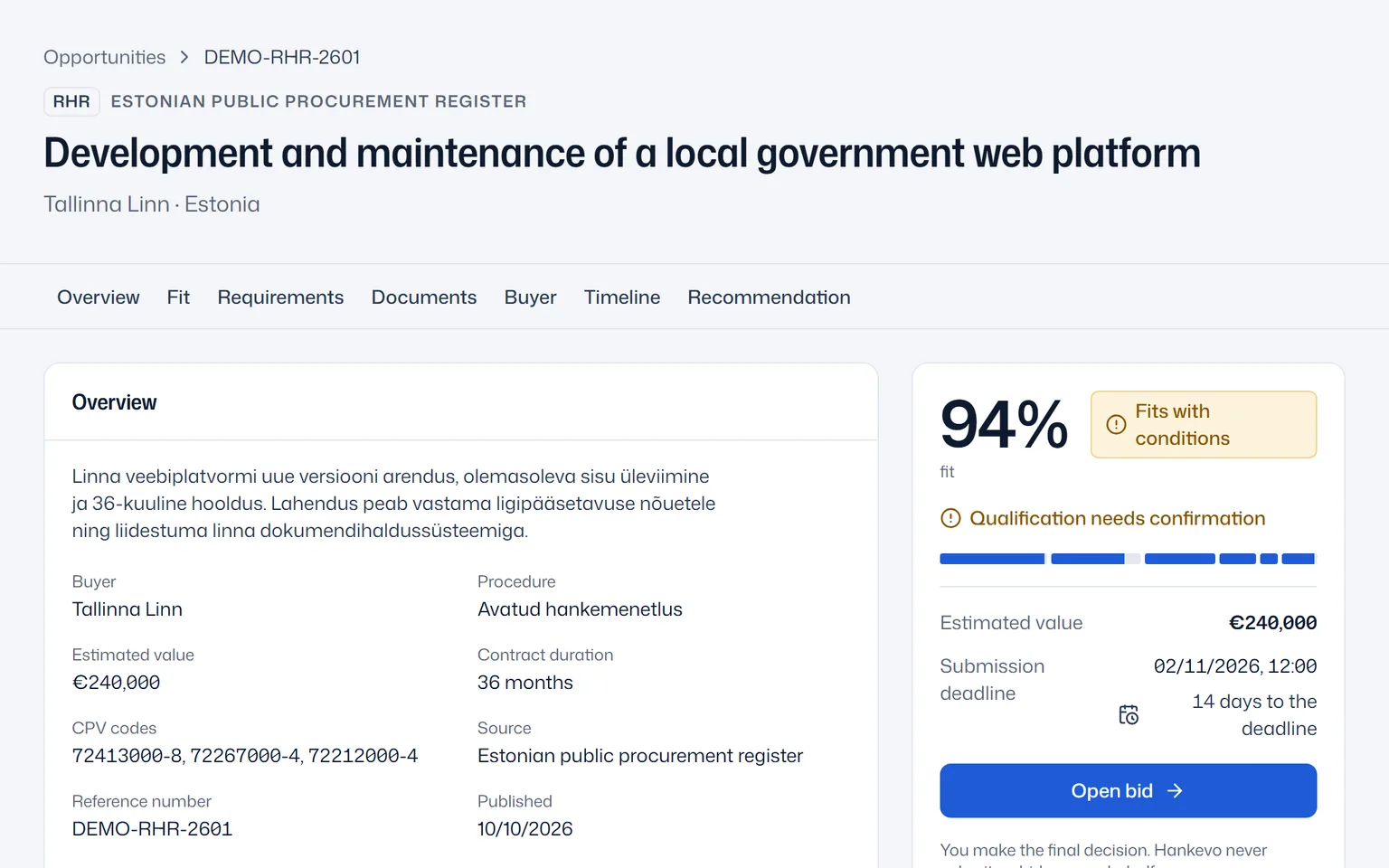
- Fit - how well the opportunity suits your company. The percentage is made of several parts, listed under What the fit score is made of: Qualification, Capability, References, Contract value, Location and Deadline and capacity. For a grant the percentage is the fit alone: whether the call is meant for what the project or the company does. The strip under it shows the other parts apart.
- Qualification - whether the mandatory requirements are met. For grants the same thing is called Eligibility. It is not a percentage but one of four states.
- Evidence - whether a claim rests on confirmed data. Every fact carries a mark of its origin, and a fact nobody confirmed proves nothing.
- Recommendation - whether taking part makes sense on what is known now.
- Readiness - how far the preparation of a bid or an application has come. It measures your work, not how well the opportunity suits you.
Some requirements read by AI also show Confidence. It says how confidently the text was read from the document, not how likely you are to win.
The four states of qualification
- Qualifies - every mandatory requirement is met on confirmed data.
- Qualification needs confirmation - something is open: the evidence is not in the profile, a fact is unconfirmed, or nobody has reviewed the requirement.
- Does not qualify now - at least one mandatory requirement is known not to be met.
- Qualification not assessed - no mandatory requirements are known yet, so there is nothing to conclude from.
Two examples
How to read them together
- Look at qualification first. A blocking requirement decides more than any percentage.
- Open the requirements that are still open and answer them or add evidence. See requirements and blockers.
- Then read the fit and what it is made of: what raises it and what lowers it.
- The recommendation sums them up. When the fit is high but qualification is open, Hankevo holds the recommendation back and says so. See the recommendation to take part.
- Follow readiness only once you have decided to take part.
What Hankevo does not promise
None of these assessments is the decision of a buyer or a funder. Hankevo reads what is in the notice, in the documents and in your profile. Before you submit, check the requirements in the official source yourself.
Last checked October 27, 2026